


Designing mobile experiences across platforms, systems and payments
From consumer apps at scale to enterprise systems and emerging payment flows.
FOCUS: Mobile Product | Consumer & Enterprise | Interaction Design | User Experience Design

Context
Mobile design isn’t one thing. The same device supports consumer interactions, operational workflows, and high-trust transactions, each with different constraints.
This work spans those contexts.
EA - Mobile platforms
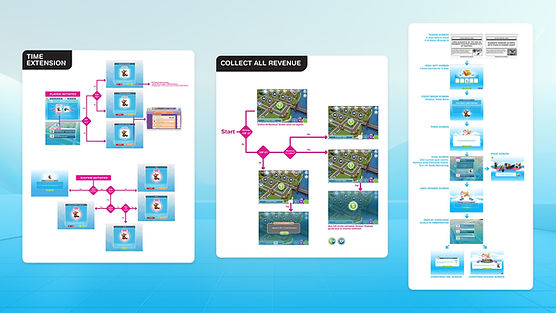
At Electronic Arts, I worked on mobile consumer platforms supporting large-scale live-service games, including The Sims FreePlay and Need for Speed: The Run. My role focused on designing and shipping game systems that supported player engagement at scale, spanning progression mechanics, live events, and monetisation flows across iOS and Android.
Over several years, I collaborated closely with producers, engineers, artists, and game designers to deliver dozens of major updates, ensuring each release aligned with the product vision while meeting the expectations of a global player base. This work required balancing usability, visual clarity, and business goals within the constraints of live, continuously evolving products.
Click any image for full view.


Catapult - OpenField Plus
OpenField Plus (OF+) was a mobile productivity tool for Catapult Sports, designed to help elite sports teams manage training activities and periods in real time. The product was used pitch-side by coaches and analysts to create, update, and track sessions as they happened.
I led the design and user testing of the app, focusing on fast, reliable interactions in high-pressure environments. The product was well received internally and launched to customers, becoming a core part of Catapult’s mobile workflow for managing training sessions in the field.
Click any image for full view.


AP+ - ID enabled payments
Exploring how identity could be introduced into mobile payment flows for BP, particularly in unattended environments.
Existing flows rely on pre-authorisation and card checks, with limited visibility of who is transacting, creating a trade-off between fraud risk and user friction.
This concept introduces identity (via ConnectID) alongside payment:
-
Payment triggered via push notification
-
Biometric authentication (Face ID)
-
Optional identity sharing (e.g. age verification)
-
Separation between payment approval and identity consent
The prototype was presented back to BP and the flow was used to anchor discussions with BP and Australian Payments Plus (AP+) around how identity could sit alongside existing payment interactions.
Below is an end-to-end flow showing registration, identity verification via ConnectID, and subsequent payment interactions, with questions to be discussed with teams:


Close-up view of the push-triggered payment, biometric authentication, and optional identity sharing.
Bringing this together
Across these projects, the common thread is not 'mobile design', it’s designing experiences that balance usability, system constraints, and real-world behaviour.
-
Consumer - Optimise for speed and engagement
-
Enterprise - Support complex decision-making
-
Payments - Balance trust, risk, and friction
Each poses different challenges and requires different approaches, but the goal stays the same to make complexity usable.
